
Daily Supplement Stack
A Morning Supplement Record: Vitamin D, Magnesium, and the Case for Consistency
Marcus Chen · 14 February 2026
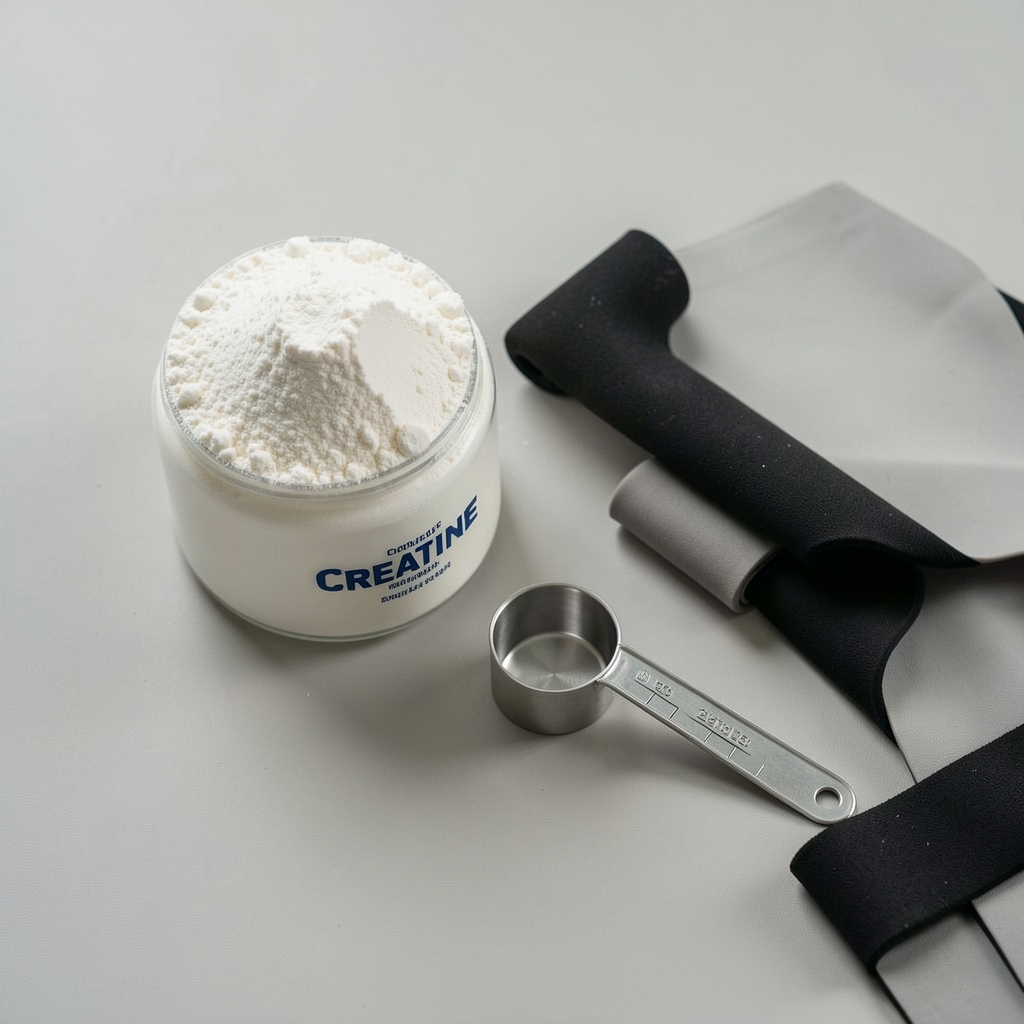
The published literature on creatine spans more than four decades. Few nutritional supplements have been studied as extensively in the context of physical output for men who train with consistency. This editorial review reads that literature in plain language, separating what is robustly supported from what is more circumspect, and placing both in the context of a deliberate active men's supplement routine.
Creatine monohydrate is among the most reviewed compounds in the nutritional literature on physical performance. Peer-reviewed research published in sports nutrition, exercise physiology, and dietary science journals over the past four decades has consistently documented its role in supporting physical output over time in resistance training routines. The editorial position of this journal is not to reproduce that literature in technical detail, but to contextualise it for the active man building a daily supplement stack.
Three observations from the published literature are editorially relevant here. First, the observed effects of creatine supplementation on physical output are most pronounced in the context of high-intensity, short-duration activity — the kind that characterises resistance training and interval-based exercise. Second, the effects accumulate over time: studies consistently note that sustained supplementation over four-to-eight week periods shows more robust patterns than single-session observations. Third, and perhaps most pertinent to this editorial, the literature overwhelmingly notes that individual response varies substantially. Creatine is not a fixed-outcome supplement. It is a foundational one whose contribution to the routine plays out across weeks and months, not single sessions.

For men building a daily supplement routine, creatine's placement within the stack requires some consideration. Unlike vitamin D, which is typically taken once per day in the morning, or magnesium, which many active men place in a post-training or pre-sleep window, creatine's timing within the daily rhythm is less definitively anchored in the published literature.
What the evidence does support clearly is that consistent daily intake — regardless of whether it falls before or after training — produces more reliable outcomes than intermittent supplementation timed to specific sessions. This is nutritionally logical: creatine's function in the stack relates to the cumulative replenishment of phosphocreatine stores in muscle tissue over time, not to a single acute window. For men who train in the morning, a post-training window with protein intake represents the most observed placement. For evening trainers, the pre-sleep recovery window has been noted in several nutritional habit surveys as the common anchor.
No editorial review of creatine in active men's supplement stacking habits would be complete without addressing the surrounding nutritional architecture. Creatine does not perform in isolation. The published literature on physical output consistently observes that creatine's role is most productively contextualised within a routine that includes adequate daily protein intake and broad B vitamin coverage.
Protein and daily performance represent a direct relationship in the nutritional literature. Whole-food sources of protein — eggs, lean meats, legumes, dairy — form the base of the daily intake pattern for most active men in the published editorial and nutritional survey literature. Protein supplements (whey, plant-based, or otherwise) are consistently positioned as additions to that whole-food base, not replacements. The editorial framing here mirrors the journal's broader position: supplement as addition, whole food as foundation.
B vitamins contribute to daily focus and energy awareness. For men with high physical and cognitive output, B vitamin coverage — typically through a B-complex supplement or a broad-spectrum multivitamin — provides a nutritional floor beneath which daily performance patterns can become erratic. The published nutritional literature on B vitamins and energy is broad and consistent: B vitamins are not performance-enhancing in the dramatic sense, but their absence in the dietary pattern produces observable patterns of reduced daily energy awareness over multi-week periods.

Based on the published nutritional literature and the editorial observations of this journal's contributors, a creatine-inclusive stack for an active man in 2026 would most commonly include: a foundational nutritional base (vitamin D, magnesium, zinc); creatine monohydrate as the primary performance-supporting supplement; protein supplementation as an addition to whole-food intake; and B vitamin coverage for daily energy awareness.
Iron and active men's nutritional habits represent an additional consideration for men whose activity levels include significant endurance components. Iron contributes to sustained energy awareness in active routines. Its inclusion in the stack is more context-dependent than the core four listed above — relevant for some active men's patterns, less so for others. The editorial recommendation is that iron supplementation warrants a conversation with a qualified nutrition professional before it is introduced into the stack, particularly given the individual variation in dietary iron intake across different whole-food eating patterns.
The editorial conclusion from this review is the same as the journal's broader position on supplementation: consistency over intensity. Creatine, taken daily, produces a more reliable contribution to the active routine than creatine taken sporadically around training sessions. The same principle applies to protein intake, B vitamin supplementation, and the foundational stack of vitamin D, magnesium, and zinc discussed in the journal's previous editorial record.
Men who engage in resistance training three to five times per week and who sustain a consistent daily supplement routine over periods of six weeks or more are the primary observational group for the published literature on creatine. The editorial audience of this journal maps closely onto that group. The recommendation is simple: establish the routine, track it, and allow the consistency to do the work that no single supplement, taken once, can accomplish.
Articles published on Itamev Journal are editorial in nature and reflect the writers' observations on everyday supplementation habits and nutritional awareness for active men. The content is not intended as professional advice, nor as guidance for the management of any specific condition. Readers with specific concerns about their daily routines are encouraged to speak with a qualified wellness professional.

Marcus Chen is a Jakarta-based editorial writer focused on men's nutritional habits, supplement routines, and active lifestyle documentation. He has contributed to Itamev Journal since its founding in 2024.
More from Marcus →